Biosecurity Protocols For Small-scale Horse Boarding Facilities
Keeping a horse boarding facility running smoothly isn’t just about providing shelter and food. One key piece of the puzzle is having some rock-solid biosecurity protocols ready to go. Even smaller boarding barns can run into trouble when contagious diseases spread, so it’s smart to have a plan in place for every operation, big or small. In this article, I’ll get into how I handle biosecurity at a small stable. I’ll share practical steps and routines that keep horses happy and sickness at bay.
Why Biosecurity Matters For Small Boarding Barns
If you’re running a small horse boarding spot, you might think biosecurity rules are just for the big, fancy training centers. But diseases like strangles, equine influenza, or EHV-1 don’t really care how many horses you have. Smaller operations might even have higher risk since resources can be tight and folks usually trust each other to just do the right thing. Laying down even basic protocols can make a world of difference in keeping horses healthy and minimizing chaos if something does pop up.
Biosecurity isn’t only about shutting out the bad stuff. It’s about building a barn where horses thrive and boarders feel confident their animals are in safe hands. It’s also good for your reputation. Word travels fast at the local feed store, so having your act together goes a long way when owners talk to their connections.
Key Components Of a Practical Barn Biosecurity Plan
Having a decent protocol doesn’t mean you need top-of-the-line equipment or a big staff. Here’s how I set up an all-in-one plan for a small horse boarding facility:
- Written Guidelines: Keep simple, posted rules for everyone—owners, farriers, vets, and visitors.
- Clear Entry Points: Label barn gates or doors and limit where people and animals come in, so you know who’s moving around.
- Stable Hygiene: Stick to regular cleaning for stalls, shared tools, and common spaces.
- Isolation Options: Even a temporary quarantine space can keep your whole herd safer.
- Education: Make sure boarders know why rules are in place and get them on board with the basics.
The Basics? Daily Biosecurity Routines
Small habits add up, really quickly. Here are daily steps I follow, and I ask everyone at my stable to do the same:
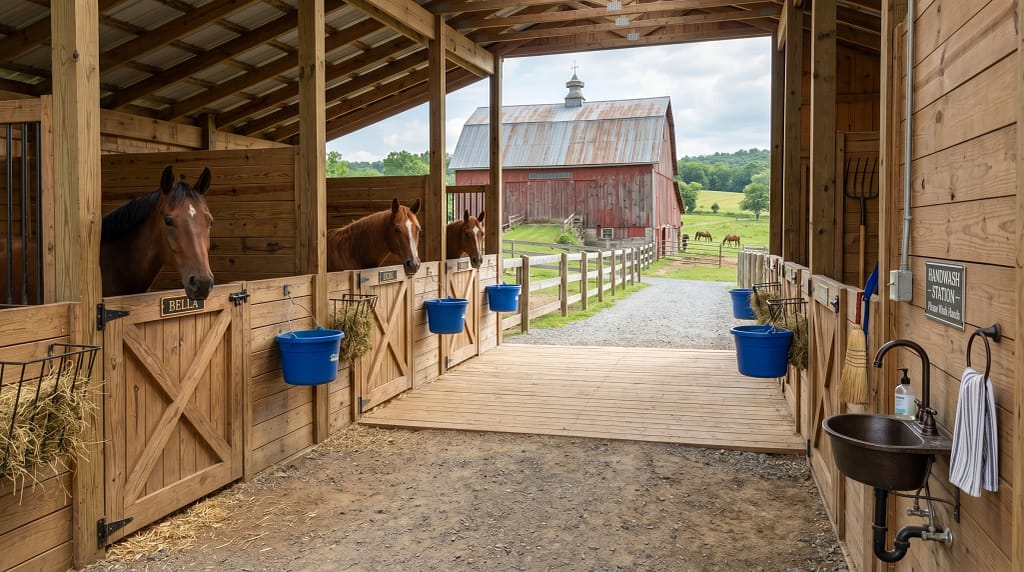
- Handwashing Stations: Keep soap and water or hand sanitizer at the entrance and around the barn for easy access.
- Personal Gear: Each horse uses its own grooming kit, water bucket, and tack whenever possible. Don’t share fly masks or halters unless they’ve been disinfected between horses.
- Footwear And Clothing: I have a separate pair of boots for my barn and use disinfectant mats if I’ve been on another property.
- Cleaning Tools: Rakes, pitchforks, and wheelbarrows get cleaned regularly, ideally after they’re used in each stall or paddock.
Taking these simple steps as part of your normal barn chores doesn’t eat up much time—just stick with it and the benefits build fast.
Manage Horse Introductions And New Arrivals
New horses bring new risks, plain and simple. I go for a quarantine routine for every new boarder—even if the horse looks perfectly healthy. Most of the time, isolation lasts 10-14 days. The horse hangs out in its own paddock or stall while only a handful of people, with separate gear, take care of it for that stretch.
Before a new arrival, I ask for recent veterinary records and vaccination details. If I’m not sure about something, I check with the previous barn or the vet who’s cared for the horse. Open conversations about these policies are essential; nearly every owner appreciates your concern for everyone’s safety when you spell out why this is part of your plan.
Common Challenges And How To Handle Them
Even with good intentions, a few tough spots pop up for small barns:
- Space Limitations: It’s not always easy to isolate a horse if you’re short on extra stalls. You can use a temporary fenced spot outside, or stagger new arrivals to give horses some space.
- Compliance: Some folks don’t always see the point of new rules at first. Real-life stories of outbreaks from online resources or local news can help boarders buy in. Staying in touch and posting reminders in the barn group chat also helps busy owners stay on track.
- Costs: Biosecurity isn’t free—extra sanitizers, buckets, or adding a handwashing station costs up front. But saving on potential vet bills is worth it. Grouping supply orders with nearby barns can also save some cash.
Deal With Visitors And Service Providers
Service folks—like vets, farriers, and delivery drivers—go to a lot of barns, so nobody can really know what they’re bringing in. I always ask them to clean their hands and, if it’s rainy or muddy, dip boots in a mild bleach solution before getting into the main barn areas. For boarders with guests, a polite reminder about not petting horses or using barn equipment without asking is usually all it takes.
Extra Steps During Disease Outbreaks
If news comes in that a sickness has spread nearby (like strangles or flu), that’s my cue to take routines up a notch. Here’s how things change at my barn in those scenarios:
- Double Down On Cleaning: All water buckets and feed tubs get cleaned more often, and I disinfect common areas each day.
- Visitor Restrictions: Put a pause on non-essential visits or group events. Only necessary owners or staff come in for a while.
- Entry Logs: Jot down who’s coming and going, plus where they’ve been. If something happens, you can easily trace things back.
- Monitoring: Daily temperature reads for each horse, written down in the feed room, catch early warning signs and make it easier for everyone to keep an eye out.
Most boarders totally get it when things tighten up for a bit. As long as you explain the “why” and keep communication open, everyone’s happy to help protect the herd.
Real-World Example? Quick Response To A Suspected Illness
One time, a gelding at my place came back from a local show with a nagging cough and a runny nose. Here’s how our system kicked into gear:
- The horse went straight into our makeshift isolation paddock with its very own water and tools.
- I updated the other boarders and anyone else who had gone to the same show. Everyone checked their horses’ temps daily for a week, just to be sure.
- The farrier’s appointment was bumped to the following week, and when our vet came out, they saw the sick horse last. We wiped down all tools and hands after that visit.
- Riding lessons and group hangouts paused until the symptoms cleared and the rest of the herd stayed healthy.
Quick action and sticking to our routines prevented a barn-wide outbreak and gave everyone some clear next steps. Seeing these protocols work in real life proves you don’t need a huge operation to keep horses safe—you just need consistency and a willingness to adapt.
Frequently Asked Questions about Biosecurity for Small Barns
Q: Do I really need a separate quarantine stall if I only have a few horses?
A: If you don’t have an extra stall, a temporary fenced area outdoors works. The main thing is to keep the newcomer somewhat separate from direct contact.
Q: How much should I spend on biosecurity supplies?
A: Start simple: stock up on soap, disinfectant, and a few extra grooming tools. These basics go a long way, and you can often get good deals by buying in bulk with other barns.
Q: What if a boarder ignores the barn’s biosecurity rules?
A: Have your rules clearly posted and talk with them directly if there’s a problem. Explaining your reasoning almost always gets people on your side when they see it’s about everyone’s safety.
Q: Are vaccines enough to keep my barn safe?
A: Vaccines are vital but they’re just one part. Good hygiene, separating new or sick horses, and real communication fill in the gaps vaccines can’t cover.
Biosecurity Pays Off In The Long Run
For a small boarding barn, a trusty biosecurity plan is like an insurance policy—it protects both horses and humans. You don’t need fancy tech or a huge staff. All you need is consistency, a few must-have supplies, and everyone pitching in. After several local outbreaks, I know these routines make a real difference. It means fewer vet visits, more peace of mind for your boarders, and horses that remain healthy and relaxed.
As your barn grows, you can always switch things up and add new protocols, but the basic steps stay the same. Putting a bit of extra effort into biosecurity isn’t just about stopping illness. It’s about building a welcoming, safe place where horses and their people can settle in and really enjoy barn life without stress about the next bug rolling through.
Understanding horses on Amazon
Happy riding! 🐎
Build Your Online Business
and Learn Affiliate Marketing
See you there!
Our Unique Value Propositions
Discover why Chwals GPT is the top choice for equestrians looking
to build their online presence (register for free)
Tailored Equestrian Expertise – Community Connection – Intuitive User Experience