
Equine First Aid 101 & What Every Horse Owner Should Know
As a horse owner, being ready for emergency situations is essential for your horse’s safety and wellbeing. Even the calmest or most experienced horses can get injured in the barn, in the field, or out on the trail. When something goes wrong, I know every minute counts. By having some first aid knowledge and the right tools close at hand, I can help keep minor issues from getting worse before the vet arrives.
I remember feeling overwhelmed when I brought home my first horse. I wanted to make sure I could handle whatever came up, from simple scrapes to more serious problems. If that’s how you feel too, this guide will help you understand the basics of equine first aid, what supplies to keep nearby, and the steps for handling emergencies with confidence.
This guide gives straightforward explanations, practical checklists, and useful advice so you can be ready to step in and help your horse when it matters most.
How to Spot Common Horse Emergencies
Knowing when your horse needs quick care makes a difference. I keep an eye out for these warning signs that something could be wrong:
- Severe or deep cuts, or heavy bleeding
- Sudden lameness, not putting weight on a leg
- Signs of colic, such as looking at the belly, rolling, or refusing food
- Swelling in the legs or joints
- Rapid or difficult breathing
- Choking or trouble swallowing
- Sudden changes in behavior, like lethargy or panic
If I notice any of these signs, I realize it’s time to act right away. For minor injuries, I can often handle them myself, but for anything serious, my next step is to call the vet without delay.
Decide When to Call the Vet
In some cases, I can manage simple scrapes at home, but I never hesitate to call my vet for anything involving:
- Serious bleeding that doesn’t slow after a few minutes of steady pressure
- Large or deep wounds, especially if near a joint or eye
- Unusual swelling or heat in a limb, which could suggest infection or a tendon injury
- Obvious pain, lameness, or signs of colic
- Any injury that shows bone, muscle, or tendons
- Anything I am unsure about, or if my horse’s condition quickly worsens
What to Keep in an Equine First Aid Kit
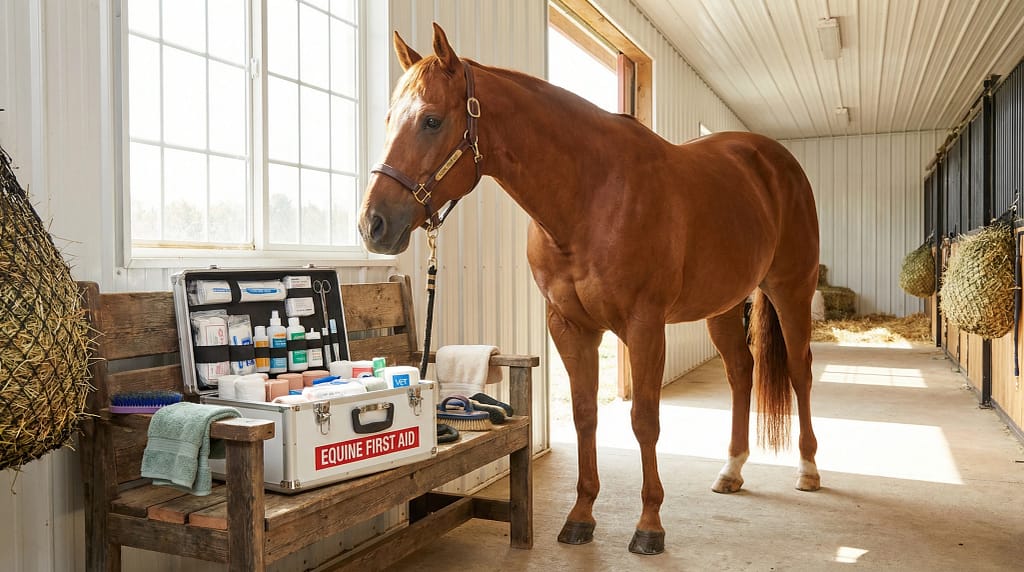
I always keep a well stocked first aid kit in my tack room and carry a smaller version when I travel with my horse. Everyone’s kit may vary a bit, but here are the basics I recommend:
- Sterile gauze pads and large cotton sheets for stopping bleeding
- Cohesive bandage wrap (like Vetrap), adhesive tape, and plastic wrap
- Antiseptic wound cleanser (such as Betadine or Nolvasan)
- Saline solution for rinsing eyes or wounds
- Scissors and clean tweezers
- Thermometer and disposable gloves
- Nonstick wound dressings
- Ice packs or cold packs
- Emergency contact numbers for your vet, local animal hospital, and a reliable neighbor
I check my kit regularly to ensure the supplies stay fresh and nothing is missing when I really need it. You could even add extras like a flashlight, extra batteries, and a waterproof marker for labeling supplies in an emergency. Some horse owners also like to keep a tube of veterinary triple antibiotic ointment and an instant thermometer strip for quick checks.
Portable First Aid for Trail Riding
My trail kit is much smaller, but I always bring essentials like a roll of Vetrap, gauze, a couple wound wipes, and my phone. It means I’m not caught off guard if my horse cuts a leg or picks up a stone while out riding. For longer rides, I might add a small bottle of saline solution, latex gloves, and a few lightweight nonstick pads, fitting everything in a small pouch so I won’t be weighed down.
Key Skills for Horse Emergency Care
Even if calling a vet is needed in a real emergency, having a few hands-on skills brings me peace of mind. Here are the basic actions I find most valuable:
How to Check Vital Signs
- Temperature: Use a digital thermometer placed gently in the rectum. A healthy adult horse usually has a temperature of 99.5–101.5°F (37.5–38.6°C).
- Heart rate: Feel the pulse under the jaw or on the digital artery (inside the fetlock). Normal for an adult is 28–44 beats per minute.
- Respiratory rate: Watch your horse’s flank move to count breaths. Normal is 8–16 breaths per minute.
- Gum color and capillary refill time: Healthy gums are pale pink and moist. Press on them and they should return to pink within 2 seconds.
Knowing these numbers for my own horse means I can spot problems quickly and give accurate details to my vet. Also, practicing checking these signs regularly helps you get a feel for what’s normal.
How to Clean and Bandage a Wound
- Put on gloves and gently rinse the wound with saline or clean water. Remove visible dirt but avoid scrubbing.
- Pat the area dry with a clean towel.
- Apply an antiseptic cleanser; avoid hydrogen peroxide or harsh soaps, as they can damage healing tissue.
- Cover with a sterile, nonstick pad and wrap securely with Vetrap or cotton bandage, making sure not to wrap too tight.
For wounds near joints, eyes, or with significant swelling or bleeding, I call my vet to avoid complications.
What to Do If You Suspect Colic
Colic can be worrying, but staying calm helps. If my horse shows colic signs (such as pawing, rolling, not eating, or sweating), I first walk the horse slowly if it’s safe, remove feed, and call my vet straight away. I record the horse’s vital signs and stay nearby until help arrives. I never give medication or water unless my vet says so.
Stay Calm During an Equine Emergency
I have learned that keeping a cool head matters as much as knowing the right steps. Horses notice our tone and actions, so by taking a few deep breaths and acting steady, my horse feels calmer too. Speaking softly, keeping my horse close, and handling them as gently as possible really does help in a pinch.
Prevent Common Injuries and Illnesses
Regular checks go a long way in preventing emergencies around the barn and pasture. I make sure to:
- Look over fences for sharp spots or loose wires
- Keep pastures and stalls free of debris
- Make sure there’s always clean, fresh water available
- Book routine hoof trimming and dental care
- Keep up with yearly vaccinations and deworming
Paying attention to small details every day and being familiar with my horse’s normal routine means I often spot problems before they get serious. Even simple things like walking the pasture regularly to pick up sticks or old buckets can prevent a hoof injury.
Frequently Asked Questions About Equine First Aid
How do I keep my horse still while giving first aid?
Sometimes pain makes it tough to keep a horse steady. I usually get a friend to help hold the horse with a halter and lead rope. I talk gently and move slowly, offering treats or a familiar game if it makes things easier. In very stressful cases, it might be safer to wait for professional help so no one gets hurt.
What should I do if my horse is bitten by another animal?
First, I make sure my horse is out of danger, then check and clean the wound well with saline and wrap a bandage around it. I call my vet, since animal bites can easily become infected and sometimes require antibiotics.
Can I give my horse human pain medicine?
Giving human pain medicines or any medication without a vet’s advice can be dangerous. I never give anything unless my veterinarian specifically tells me it’s safe and shares the right dosage.
Should I practice first aid with my horse even if there’s no emergency?
Absolutely! Practicing skills like checking vitals or putting on a bandage helps both you and your horse stay calm during the real thing. It also gets your horse familiar with the process, making emergencies less stressful.
Next Steps? Build Your Confidence in Equine First Aid
Getting solid first aid training for horses gives me more confidence and makes my horse safer. I suggest joining a local first aid class, reading trusted guides from groups like the American Association of Equine Practitioners (https://aaep.org), and practicing handling calm, patient horses to polish your technique.
- Put together a first aid kit and keep it in an easy-to-reach location in your barn or trailer.
- Learn your horse’s normal vital signs and check them often to catch surprises early.
- Practice cleaning wounds and applying bandages so you aren’t scrambling under stress.
What’s one thing you’ll add to your emergency prep routine for your horse? The more you learn and prepare, the better you can support your equine partner—keeping both of you safer for every adventure to come.
Understanding horses on Amazon
Build Your Online Business
and Learn Affiliate Marketing
See you there!
Our Unique Value Propositions
Discover why Chwals GPT is the top choice for equestrians looking
to build their online presence (register for free)
Tailored Equestrian Expertise – Community Connection – Intuitive User Experience


