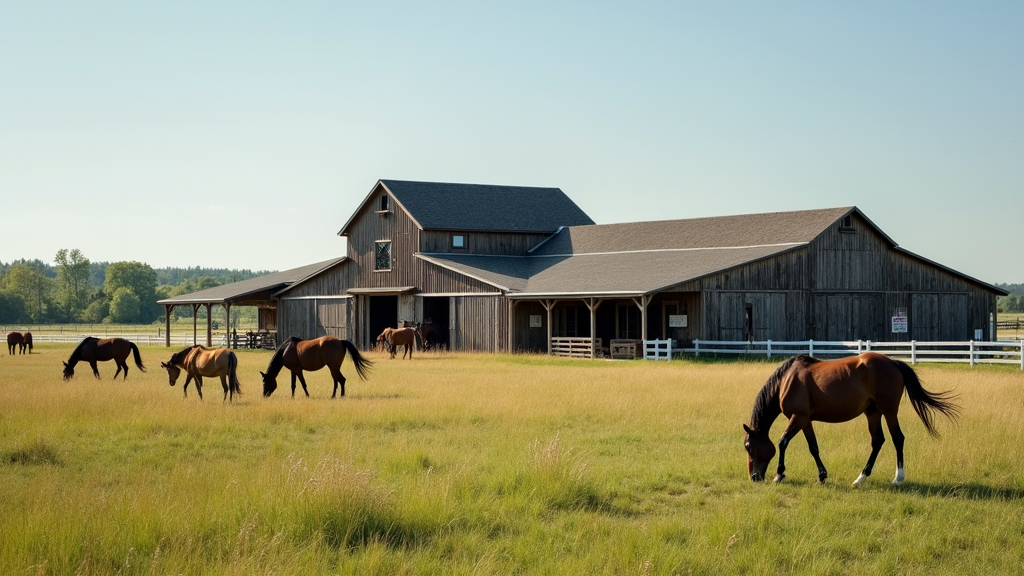
Natural horsemanship principles come down to five habits: think like a prey animal, apply pressure and release it the instant the horse tries, ask before you demand, behave the same way every day, and get your timing right. Everything else is vocabulary, and some of it is merchandise.
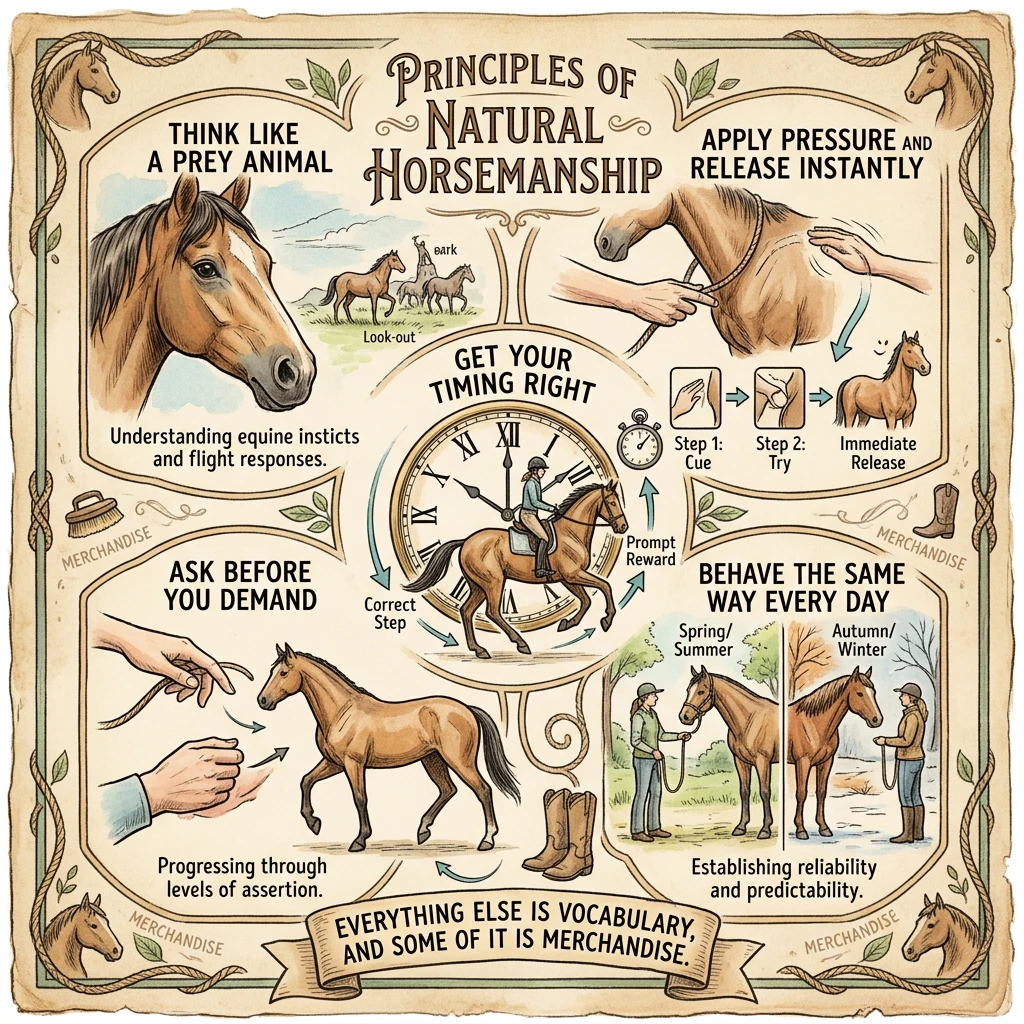
Natural Horsemanship Principles That Work Without the Guru Hat
This guide takes each principle to the barn, with what to do on the ground and what to do in the saddle. You can try all of it this week with the horse you already have and the halter already hanging on the hook.
What is natural horsemanship, and what isn’t it?
Natural horsemanship is a way of handling and training horses built on how horses actually learn: through comfort, discomfort, and clear communication. The horse is treated as a partner who can understand a request, which is a more useful starting point than treating her as a machine with a stubborn setting.
The label has picked up a lot of baggage. Rope halters, special sticks, weekend clinics, and strong opinions about which personality did it first all travel under the same name. None of that is required. A rider with a plain leather halter and a good grasp of the principles will get further than one with a tote bag full of gear and no timing.
So this article skips the lore and the personalities entirely. What follows is about what your hands, body, and voice do, and what the horse makes of it. If you want help decoding what the horse is telling you, the equine behavior interpretation guide covers that side of the conversation.
Why does thinking like a prey animal change everything?
Horses are prey animals. Their survival has always depended on noticing something odd and leaving before anyone has time to find out whether it was dangerous. A plastic bag in the hedge is, to a horse, a legitimate question about her future.
Once you accept this, a lot of “bad behavior” gets a plainer explanation. The horse that spooks at the mounting block she has walked past four hundred times is not being dramatic to annoy you. Something changed, such as a shadow, a bucket, or a new angle, and her first job is to be safe. Your job is to be the more interesting thing to pay attention to.
Three habits follow from this:
- Move like you have somewhere calm to be. Sudden, jerky, or hurried movements look like trouble to a horse. Slow is not a style choice, it is information.
- Let her look. A horse that is allowed to look at the scary object, and sniff it if she wants, often settles faster than one hauled past it with a tight rope.
- Mind your own breathing. A rider who holds her breath tells the horse something is wrong. Breathe out like you mean it.
If anxiety is the bigger problem at your barn, the piece on managing equine anxiety with tips from specialists goes deeper. Here, the point is that every other principle works better once you stop arguing with her instincts.
How do pressure and release actually work?
Pressure is any request the horse can feel: a light squeeze on the lead rope, your leg against her side, your body stepping into her space. Release is the instant you take that request away because she responded. The release is what teaches. Pressure alone only tells her something is happening.
Here is a ground example. You want her to step back. You apply a little steady pressure on the lead rope, and the moment she shifts her weight backward, even slightly, you let the rope go slack. She just learned that rocking back makes the annoying feeling stop. Repeat it a few times and the “slightly” becomes a real step, and then a step from a whisper of a cue.
The common mistake is keeping the pressure on after she has tried. If you hold the squeeze while she is already stepping back, she learns that doing the right thing changes nothing, so she stops bothering. Horses are generous about this for a while, then they simply tune you out.
Pressure also does not mean force. The goal is the smallest amount that gets a response, and then a little less next time. Think of it as a volume dial you are always trying to turn down while keeping the same result.
What does asking instead of demanding look like on a Tuesday morning?
Asking starts small and builds in steps, giving the horse a fair chance to answer before the next step arrives. Demanding skips straight to the loud version and then acts surprised by the reaction.
Say you are leading her from the paddock and she plants her feet at the gate. A demand is a hard haul and an increasingly red face. An ask goes like this:
- Look where you want to go and soften your own body.
- Take up a light feel on the rope.
- If nothing happens, add a bit more: a gentle bump, or a step of your own in the right direction.
- The moment she shifts her weight forward, release completely and walk on like nothing happened.
Each step gives her a chance to answer before you escalate. Most horses, given that chance, answer sooner each time, because they learn that the quiet version is the one worth listening to.
Ground work is not only for horses with problems, either. Picking up a foot, stepping over, lowering her head for the bridle: all of these are small asks you can make a dozen times a day. A horse used to being asked politely is much easier to handle when the day is not polite, such as the farrier running late, a trailer ramp, or the wind getting ideas.
There is a wry little truth here: the horse will usually forgive a clumsy ask but will not forgive an unclear one. Be kind to yourself on the first, and work on the second.
Why does consistency beat cleverness every time?
A clever technique used once teaches a horse almost nothing. A plain one used the same way every day teaches her quickly, because she can finally predict what the cue means.
Consistency means the same cue gets the same response from you, whoever is holding the rope and whatever kind of morning it has been. If the leg squeeze means “go” on Monday and “I’m just resting my leg” on Tuesday, she is not disobedient on Tuesday, she is confused. Horses cannot read your mood and then apply the right rulebook.
Some small places to practice it:
- Choose one cue per request. If “walk on” is a cluck, keep it a cluck, rather than a cluck, a kiss, a shout, and a muttered plea.
- Keep your rules about space. If she is not allowed to walk into you on Monday, she is not allowed on Friday either, even when she is cute about it.
- Finish on a good response. End a session on something she did right, even if it was small, so the last thing she remembers is the release.
Cleverness has its place, but it works as a layer on top of habits the horse already understands. Skip the habits, and the clever trick falls over the first time you try it somewhere new.
How do you bring these principles into the saddle?
The principles carry over almost unchanged. Your leg, seat, and reins are just more places to apply pressure and release. The prey-animal rules also still apply: a rider who grips with her knees and holds her breath is sending the same “something is wrong” signal she would send from the ground.
Start with a stop. Ask first with your breathing and by softening your seat. If she does not respond, close your fingers on the reins with a light, steady feel. The moment she slows, release. Done well, you end up stopping with so little visible effort that onlookers assume the horse is simply well behaved. Which she is, thanks to your timing.
Do the same with a leg cue. A light squeeze, a pause long enough for her to answer, then a slightly firmer one, then release as soon as she moves. Avoid the habit of kicking constantly. A horse that is always being nagged learns that leg pressure is background noise.
For riders who want to put structure around this, dressage for beginners is a natural next step. It is essentially pressure, release, and consistency in organized form: clear aids, precise timing, and a horse learning to respond to very light cues. The two approaches complement each other well.
Where do modern riders get natural horsemanship wrong?
The most common error is treating the principles as a performance. Spinning a rope dramatically in the arena while the horse looks bored is theater, and the horse has not signed up for it.
A few others come up regularly:
- Confuse gentle with permissive. Asking politely does not mean never insisting. If a request is reasonable and she ignores it, the ask gets clearer and firmer until she answers, and then you release.
- Release late. Your timing drifts when you are tense or distracted. A release that arrives five seconds after the correct response teaches the wrong thing.
- Collect methods like trading cards. Switching techniques every few weeks leaves the horse with an inconsistent handler. Pick the principles, keep them steady, and let the details settle.
- Ignore the horse in front of you. An older, quiet horse and a young, sensitive one need different amounts of pressure. The principles stay the same while the dial setting changes.
- Skip professional help. If a horse is dangerous, in pain, or simply not improving, a good trainer and a vet visit beat any amount of reading.
None of this needs a guru hat, a special vocabulary, or a ritual. It needs a calm rider, clear requests, and a release delivered on time.
Your turn
Every horse eventually teaches her person something about listening, usually when the person was busy talking. So tell the Herd in the comments: what is one thing a horse has taught you about listening, and what did you try next?
The best stories and ideas are the ones we can all borrow for next morning. ☕
Understanding horses on Amazon
Build Your Online Business
and Learn Affiliate Marketing
See you there!
Our Unique Value Propositions
Discover why Chwals GPT is the top choice for equestrians looking
to build their online presence (register for free)
Tailored Equestrian Expertise – Community Connection – Intuitive User Experience