That Actually Earns Its Space In Your Tack Box
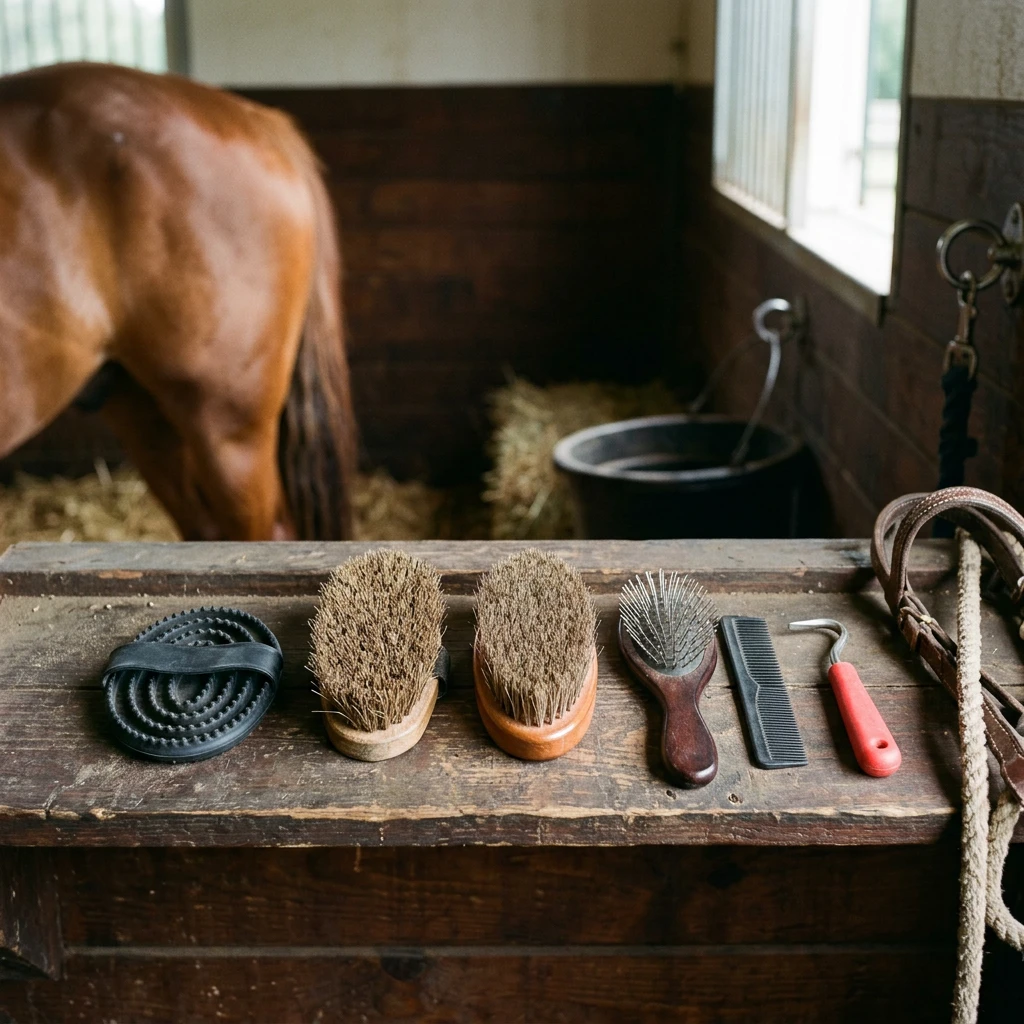
The essential horse grooming tools are a rubber curry comb, a stiff brush, a soft brush, a mane and tail brush or comb, and a hoof pick. Everything else is optional, and some of it is decoration for the tack box.
Every tool in this article gets the same two questions. Does it save time, and does it help you spot or protect your horse’s health? A tool that answers yes to both stays. A tool that answers no to both goes back on the shelf, ideally before you buy it.
What do you actually need in a horse grooming kit?
You need five things, plus a bucket or caddy to carry them in:
- A rubber curry comb
- A stiff brush
- A soft brush
- A mane and tail brush or comb
- A hoof pick
A first-time owner can start with exactly this and be fully equipped. An experienced owner can look at a tack box overflowing with brushes in six shades of blue and quietly count how many of them touched a horse this month. (Usually three.)
The two questions work because grooming is partly housekeeping and partly a daily health check. You are running your hands and eyes over every part of the horse anyway, so the right tools make that faster and the wrong ones just add clutter. A tool that does neither job is not a tool. It is an ornament with bristles.
Which brushes do the real work, and in what order?
The order matters because each brush finishes what the one before it started. Do it backwards and you spend twenty minutes moving dust from one side of the horse to the other.
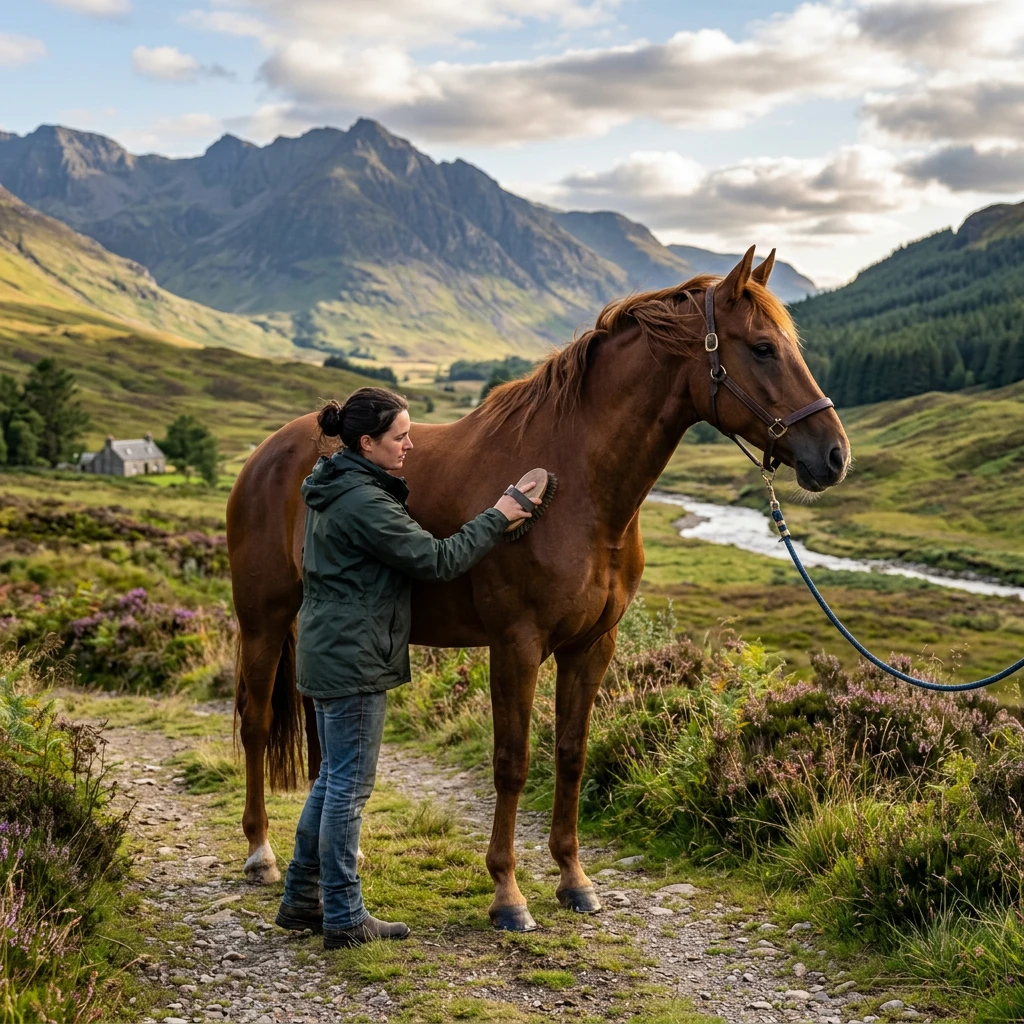
Curry comb first. A rubber curry, used in small circles, loosens dried mud, shed hair and dander from the coat and brings it to the surface. It also gives you a slow, hands-on pass over the body, which is when you notice a lump, a hot patch or a spot your horse would rather you skipped. Use a lighter touch on bony areas like the lower legs and face, where most horses have opinions.
Stiff brush second. This flicks away everything the curry lifted. Short, quick strokes in the direction of hair growth work best. It saves the most time of anything in the kit, because it takes the bulk of the dirt off before the finer brushes get involved.
Soft brush third. The soft brush removes the fine dust and leaves the coat smooth. It is also gentle enough for the sensitive areas the stiff brush should not visit, such as the lower legs and the belly on a thin-skinned horse.
Face brush, optional but sensible. A small soft brush for the face earns its place if your horse hates having the big one near their eyes. If yours does not mind, the soft body brush can do the job.
Mane and tail last. Use a wide-toothed comb or a proper mane and tail brush, and work from the ends upward, a small section at a time. Starting at the root and dragging downward pulls out hair and teaches your horse to hate the whole business. It also takes longer, because you end up going back to untangle the knots you made.
Hooves can come first or last in the routine. Either works, as long as they happen every time.
Horse grooming brushes on Amazon
Why is the hoof pick the one tool you never skip?
Because it checks the part of the horse that holds everything else up. A brush can be skipped on a lazy day and the horse will survive. A packed, unchecked hoof can mean a stone bruise, a puncture, or thrush that has been quietly developing for a week.
Picking out the feet takes a couple of minutes per horse. In that time you can see whether the sole has anything lodged in it, whether the frog looks healthy, whether the foot smells off, and whether a shoe is loose or a clinch has risen. Thrush has a distinctive smell and soft, dark, crumbly tissue in the frog and the grooves beside it. You will only catch it early if you are looking at the foot every day.
Work from heel to toe, away from you, and keep clear of the frog with the point so you do not dig into the soft tissue. A hoof pick with a brush on the end is worth having, because it clears the grit that the pick loosens. It is the one tool in the kit that does both jobs at once.
If you only ever buy one thing from this list, buy this. Then buy a second one, because the first will be at the far end of the barn the next time you need it.
What makes a grooming tool worth paying more for?
Good grooming tools tend to look unremarkable. They are just built better, and you can check that in the shop or at home with a few simple tests.
- The bristles spring back. Press a brush against your palm. Bristles that stay bent or splay out within a few uses stop lifting dirt and start pushing it around.
- The bristles are firmly set. If tufts come loose when you tug them, they will end up in your horse’s coat.
- The handle fits your hand. You will hold it for a long time, often with cold fingers. A handle that digs in or slips is a poor design, whatever the label says.
- The hoof pick is solid metal and does not flex. One that bends when you lever out a packed stone has failed at its only job. The grip should be comfortable and the point firm.
- The rubber curry is flexible but not crumbly. It should flex without cracking and keep its teeth or ridges, because those do the loosening.
- The mane comb has smooth, even teeth. Rough edges snag and snap hair.
None of this needs a long catalogue of product claims. Handle the tool, bend the bristles, and ask whether it would still be doing its job after a winter in a cold barn.
Horse grooming brushes on Amazon
Which extras save time and which just collect dust?
A few extras earn a place in the box, and many more do not.
Worth having:
- A sweat scraper. After a bath or a hard workout, scraping off the excess water speeds up drying considerably. It is a single piece of plastic or metal and it saves real time.
- A shedding blade. In heavy shedding season it removes loose coat much faster than a curry alone. It is a seasonal tool, so keep it out of the daily kit and bring it out when the hair starts flying.
- A sponge or two. One for the face and dock area, a different one for everything else, kept separate for obvious reasons. Label them if you must.
- A hoof brush. Useful for scrubbing the foot after picking it out, especially in wet weather.
Usually dust collectors:
- Multi-tool gadgets with eight attachments that each do their job slightly worse than a single-purpose tool
- A third and fourth mane brush, bought because the first two were not blue
- Fragranced sprays you find yourself using on the horse’s coat while the horse looks faintly appalled
- Anything that promises to groom the whole horse in one pass
The test is easy. If you have owned it for a month and not used it, you have your answer. 🙂
What should grooming tell you about your horse’s health?
Grooming is the daily inspection that catches small problems before they become expensive ones. While you work, keep a running mental checklist.
Skin and coat:
- Bald patches, scabs, crusty spots or flaking skin
- Lumps, bumps or swelling that were not there yesterday
- Rubbing, where the coat is rough or hair is missing from the mane, tail or flank
- Small wounds or scrapes hidden under mud
Legs and body:
- Heat or swelling in a leg, which you can feel with the flat of your hand
- Sore spots, where your horse flinches or pins their ears under the brush
- Changes in weight or condition, such as ribs that are more or less visible than usual
Feet:
- Smell, softness or dark discharge around the frog
- Cracks, stones and anything lodged in the sole
- Loose or shifted shoes
Know what is normal for your horse, because that is what makes the abnormal visible. A warm leg after exercise means something different from a warm leg at breakfast. Heat, swelling, lameness or a wound that looks deep deserve a call to your vet, not a wait-and-see.
For minor skin complaints, there is a post here on homemade herbal remedies for equine skin ailments. If you are unsure what you are looking at, ask your vet first. Keep your first aid kit within reach of the grooming kit as well, because the two are used in the same place by the same person.
How do you keep your tools clean and your kit tidy?
Dirty brushes put dust, sweat and skin debris back on a clean coat, and they can spread skin problems from one horse to another. Cleaning them takes less effort than most people expect.
- Wash brushes regularly. Swish them in warm, soapy water, rinse well and shake them out. Do it more often if a horse has had a skin problem.
- Dry them bristle-side down or on their sides, so water drains out and does not sit in the base and rot the backing.
- Scrub the hoof pick after use, especially in wet or muddy weather. It spends its life in the dirtiest places on the horse.
- Keep a separate set for any horse with a skin condition, such as ringworm, which is contagious. Share nothing until your vet says it is safe.
- Keep the kit to what you use. A caddy or box with a handle, a spot for each tool, and nothing in it you have not touched in a month. The hoof pick goes where you can grab it with one hand.
A tidy kit also gets used more consistently, because nobody grooms well while hunting through a heap of brushes for the right one.
Over to you
Now for the question that gets people talking. If the barn were on fire (everyone and every horse safely out, naturally), which single grooming tool would you go back for? Tell us in the comments which one it is and the story behind it. The best answers will tell the rest of the herd more about their own tack boxes than any shopping list could.
Horse grooming brushes on Amazon
Understanding horses on Amazon
Breeds of Horses and Their Characteristics on Amson
Enjoy your equestrian journey! 🏇
Build Your Online Business
and Learn Affiliate Marketing
See you there!
Our Unique Value Propositions
Discover why Chwals GPT is the top choice for equestrians looking
to build their online presence (register for free)
Tailored Equestrian Expertise – Community Connection – Intuitive User Experience