Is It Training, Pain or You?
Behavior and training problems
Rule out pain first, then look for gaps in training, then look at your own handling habits. Most behavior and training problems have more than one cause, so expect to work down the list instead of picking a single culprit.
A horse that bolts, rears or plants its feet at the trailer ramp is communicating something, just not in a way that suits your schedule. Your job is to work out what, in an order that does not get you hurt or waste three months on a training plan for a horse with a sore back. 🐴
Is it training, pain or you?
Usually it is a mix, and the mix changes from horse to horse. A horse with a tight saddle may bolt. A horse that never learned to stand quietly may then use that bolt to escape the discomfort. A rider who grabs the reins in a panic can then make both worse.
That is why triage helps. Each category has a different fix, and fixing the wrong one feels productive while changing nothing. Drilling trailer loading on a horse with ulcer pain is like teaching someone to dance while they have a stone in their shoe.
The order matters for a practical reason too. Pain is the cause that can hurt your horse most if you miss it, and it is also the one that makes every training attempt fail. Training gaps come next because they are the most common and the most fixable. Handler habits come last, not because they matter least, but because they are the hardest to see from the saddle.
Why does pain get ruled out first, and who do you call?
A horse in pain cannot learn what you are teaching. It can only try to make the pain stop. Calling a behavior a “training problem” before checking the body is how people end up in a long argument with a horse who was never being stubborn.
Common sources of pain behind bolting, rearing and refusing include:
- Ill-fitting saddles or pads that pinch, rock or press on the spine
- Sharp teeth, hooks or a bit that does not suit the mouth
- Sore feet, poor trimming or a hoof imbalance
- Back, hock or neck soreness
- Stomach trouble such as ulcers, which your vet can assess
Start with the people who can actually check. Your vet can examine the horse and rule out lameness or digestive trouble. An equine dentist handles the mouth. A qualified saddle fitter looks at tack while the horse is moving, not just standing. A good farrier checks the feet and the way the horse travels.
One clue to watch for is a sudden change. A horse that was reliable for two years and now bolts did not suddenly decide to be difficult. Something changed, and the body is the first place to look. A horse that has always been this way may have a training gap instead, though pain can still be hiding underneath.
Do this before you buy a new bit, a stronger noseband or a clinic ticket. Gear does not cure a sore back, and your wallet will thank you. If costs are already a worry, the piece on how horse costs keep climbing is worth a read before you book the whole team of specialists at once.
What is your horse running from when it bolts?
Bolting is flight, and flight has a reason. The horse is running from something it believes is dangerous, painful or inescapable. Your task is to work out which one.
Pain is the first suspect. A saddle that slams into the withers when the horse speeds up can turn a trot into a getaway. A horse that bolts only after a few minutes of work, or only when asked to go forward from the leg, is worth a vet’s attention.
Fear is the second. Plastic bags, a flapping tarp, a tractor starting behind a hedge, a deer in the brush. Horses are prey animals, and from their point of view the plastic bag is a predator with excellent camouflage. If the bolt happens in the same spot every time, that spot has a story. It may be a gate where the horse once got spooked, or the corner where the other horses always gallop.
Training gaps come third. A horse that never learned to respond to a slow-down cue, or to bend and turn, has no brakes to use when it panics. The bolt is not defiance, it is a horse that has not been taught the alternative. Work on stopping, turning and yielding in a quiet enclosed space, long before you need them in a crisis.
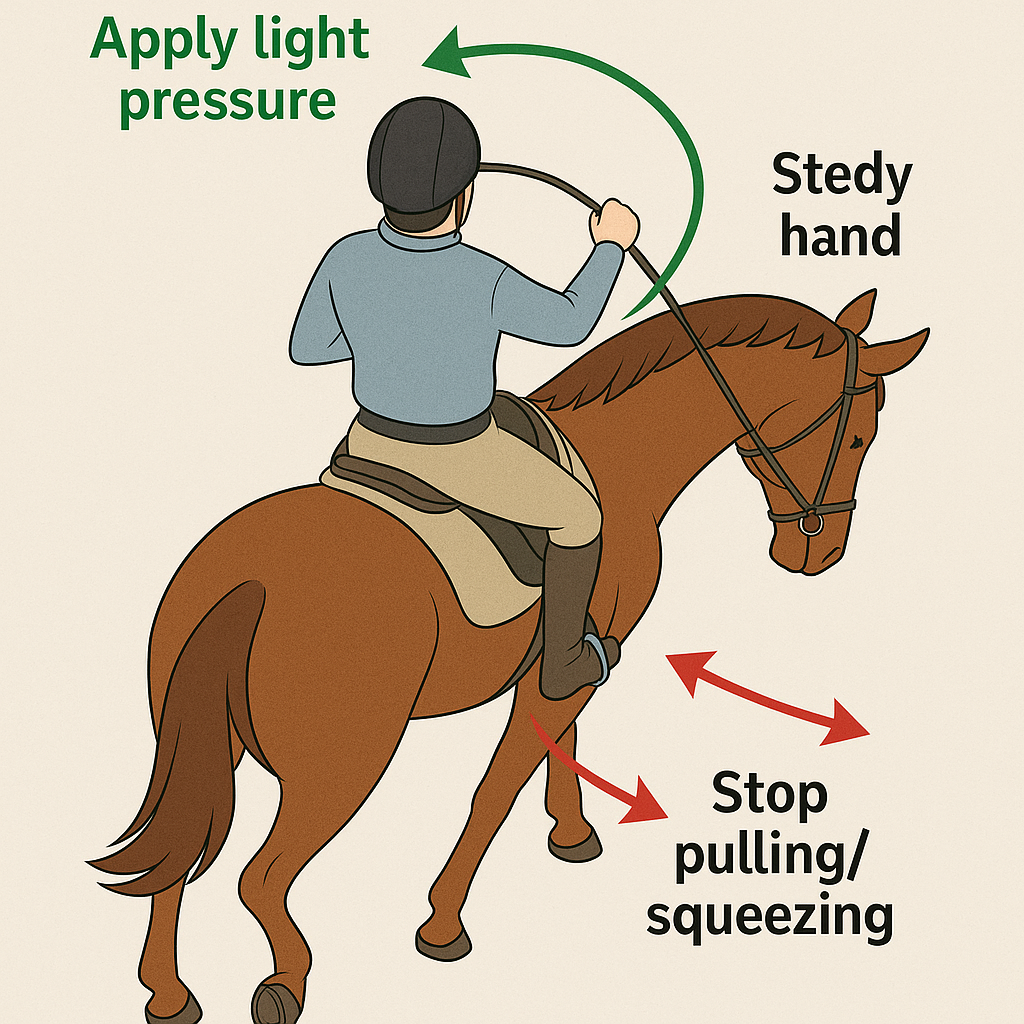
The rider’s part comes last. A tight grip on the reins, a gripping leg and a held breath all tell the horse that something frightening is happening. Many horses will take that as confirmation and speed up. Sit, breathe out and use one rein to bend the horse into a circle instead of hauling on both. A circle gives the horse somewhere to go that is not forward.
For the wider picture of how horses read the world, the guide to equine behavior interpretation and handling is a good background read. If fear is the common thread, the piece on managing equine anxiety with tips from specialists goes deeper.
What is your horse saying when it rears?
Rearing is the loudest sentence a horse can say, and it is the most dangerous one for you. A horse that goes up can come over backward, and a rider underneath is in serious trouble. Treat every rear as a safety issue first and a puzzle second.
The reasons tend to fall into a few groups.
Pain in the mouth or back. A horse that rears when the rider takes up the reins may be reacting to a bit that hurts or hands that pull. A horse that rears when asked to move forward under saddle may be sore in the back or the hind end.
Blocked forward movement. Many horses rear when they are held between a forward leg and a backward rein. They have energy, and nowhere to put it. The rear is the pressure leaving through the only exit that is left.
Fear or confusion. A horse that does not understand what you want, or is afraid of the place you are asking it to go, may go up instead.
Learned habit. If rearing once got the horse out of work, it has learned that rearing works. The behavior then becomes a tool.
What to do in the moment is simple, though not easy. Lean forward, keep your hands low and give the reins so you do not pull the horse over. Once the front feet are down, ask for forward movement, even a few steps. Then get help from a qualified trainer before you try to retrain it. Rearing is not a behavior to solve alone with a YouTube clip and a brave face.
Is the trailer the problem or is something else?
Refusing to load looks like one problem but has a few different roots. Sort them out before you buy a bigger trailer or a louder bucket of feed.
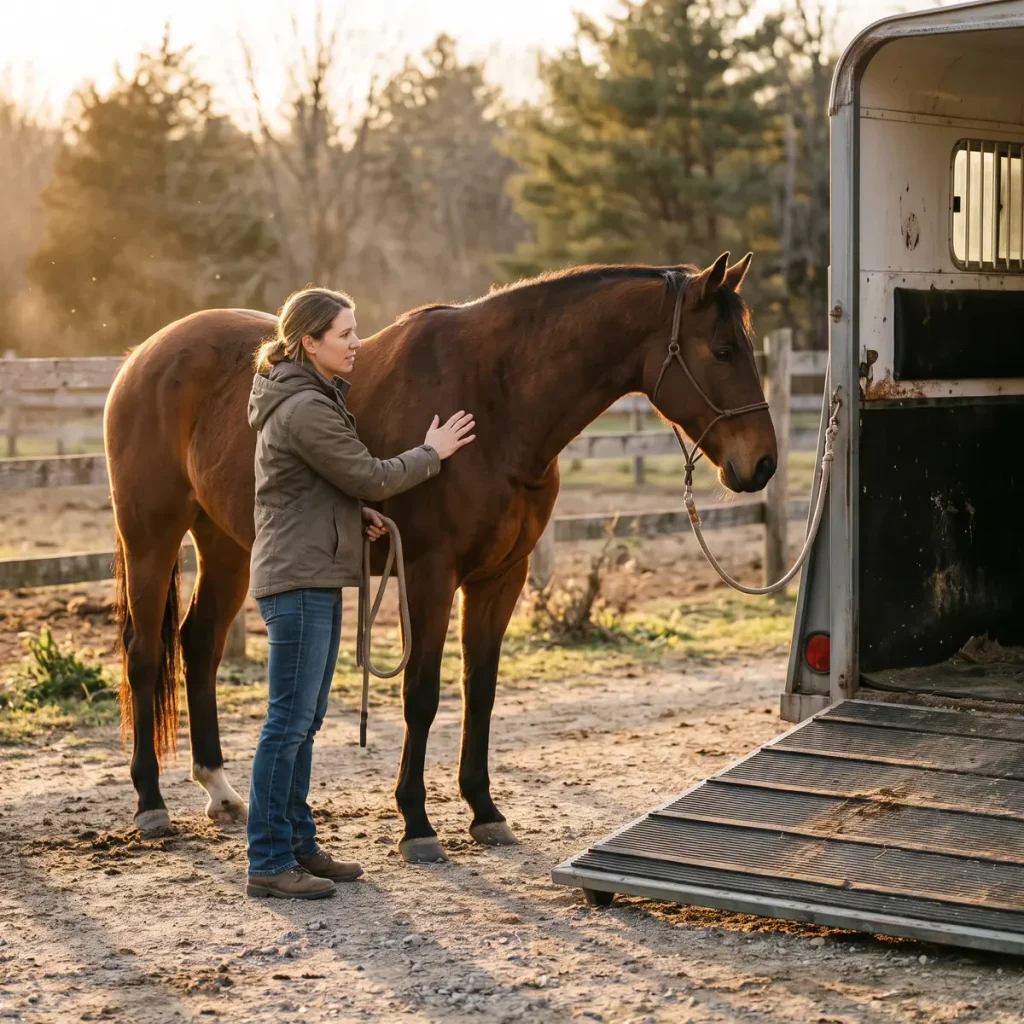
Start with the trailer itself. Is it dark inside? Is the floor slippery, noisy or wobbly under the horse’s feet? Is the ramp steep? Is the space narrow? A horse that has been shaken around in a poorly driven trailer once may remember it for years, and its refusal makes perfect sense. Try loading with the trailer parked on level ground, doors open and plenty of light.
Next, think about the horse. Does it load easily into a stable or walk through a narrow gate? If it hesitates at every enclosed space, you may be looking at claustrophobia or fear, not a trailer problem as such. A horse that went onto the trailer happily last month and refuses now may have had a bad ride or a bout of pain. Back pain can make a ramp feel awful.
Then look at the training. A horse that has never learned to walk forward on a loose lead, stop on a cue and wait while you adjust something is going to struggle with the trailer. Teach those basics at home, in small steps, long before the day you need to travel. Ten calm minutes of practice on a quiet weekend beat an hour of panic on the morning of the show.
Finally, the handler. A rushed, tense person with a lead rope pulled tight tells the horse that the trailer is a high-stakes event. Horses are very good at reading the mood of the person on the other end of the rope. Give yourself extra time, leave the deadline at home and remember that horses do not care about your arrival slot.
How do your own habits feed the problem?
This is the uncomfortable part, and it is also where most of the progress happens. Horses are consistent. We are not.
Some common habits that quietly feed behavior and training problems:
- Giving in when the horse gets loud, so that rearing or pulling pays off
- Asking for something, not getting it and asking again with a different cue
- Rushing through grooming, tacking up and warming up, so that the horse starts the ride already tense
- Skipping the basics because “he knows that already”
- Riding with hands that grab when you are nervous
- Holding your breath when the horse spooks, which signals trouble
None of these makes you a bad rider. They make you a person on a horse. But the horse is paying attention to every one of them, and it will draw conclusions that you did not intend.
A useful test is to ask whether you would give the same cue the same way every time. If your leg means “go” on Tuesday and “maybe go” on Thursday, the horse is guessing. Guessing horses get anxious, and anxious horses bolt, rear and refuse. The principles in natural horsemanship principles that work without the guru hat are a good place to tidy up the basics of clear and consistent communication.
A friend filming a short ride or a lesson can show you things you cannot feel. It is humbling. It is also very effective. 😏
What order should you follow next time it happens?
Keep this list in your head, or on a note in the tack room.
- Stay safe. Get off the horse or away from it if you can do so without making things worse. Nothing below is worth an injury.
- Check the obvious. Look at tack, girth, bit, pads, feet and any sign of heat, swelling or flinching when you touch the horse.
- Note the pattern. Write down when it happens, where, what came before and how the horse acted afterward. Patterns tell you more than any single event.
- Call the right professional for pain. Start with the vet, then add the dentist, saddle fitter or farrier as needed.
- Go back to basics. Once pain is ruled out, rebuild the simple skills such as halting, turning, yielding and standing still. Do it in a quiet place with no audience.
- Look at your own habits. Ask a friend or instructor to watch you with the horse, and be ready to hear something you would rather not.
- Change one thing at a time. If you swap the bit, the saddle, the feed and the training plan in the same week, you will never know what worked.
Patience is the part that nobody wants to hear. Horses do not fix themselves on a schedule, and the horse that took a year to become a bolter will not become a saint in a weekend.
When should you bring in a trainer or vet?
Call a vet when the behavior is new, sudden or tied to a physical clue. Limping, heat, swelling, weight loss, a change in appetite or a horse that flinches when touched are all reasons to pick up the phone.
Call a qualified trainer when the behavior is dangerous, repeated or not improving. Rearing, serious bolting and violent trailer refusal all belong on that list. A good trainer will assess the horse, the tack and you, and should be happy to explain what they see and why. Be wary of anyone who offers a quick fix with harsh gear or a long list of promises.
Call both if you are unsure. A vet rules out the body and a trainer works with the rest, and they usually get better results when they talk to each other.
There is no shame in asking for help. The people who get the best out of their horses are often the ones who asked early.
Tell me in the comments which of the three your horse does (bolt, rear or refuse the trailer) and what finally helped, so the rest of the herd can learn from it. 🐴
Understanding horses on Amazon
Build Your Online Business
and Learn Affiliate Marketing
See you there!
Our Unique Value Propositions
Discover why Chwals GPT is the top choice for equestrians looking
to build their online presence (register for free)
Tailored Equestrian Expertise – Community Connection – Intuitive User Experience