The Art Of Movement Photographing Horses In Action
Capturing horses in action is one of those challenges that’s both exciting and a little nerve-wracking. I always get a thrill from freezing that perfect burst of speed or a powerful leap, but getting everything right takes some careful planning and a good understanding of both the horses and my camera. If you’re looking for tips that actually work out in the field, I’m happy to share what’s made a real difference for me and how I get those dynamic movement shots that showcase a horse’s strength and athleticism.
It doesn’t matter if you’re a total beginner or someone with photography experience, getting great shots of horses in motion comes down to knowing your gear, reading the moment, and a bit of practical preparation. I’ll break down each step below, so you can take your horse action shots to the next level no matter where you’re starting from.
By the end, you’ll have a solid playbook for planning your shoot, using your camera settings wisely, finding creative compositions, and avoiding the most common hurdles. Plus, you’ll come away with some real-world advice to help you stay confident and creative behind the lens.
Build a Foundation and Understand Horse Movement and Behaviour
Getting that sharp, dramatic horse action shot means anticipating what the horse is about to do. Horses are unpredictable, but knowing a bit about their behaviour helps a lot.
Some things I always keep an eye on:
- Are they about to switch gaits (walking, trotting, cantering, or galloping)?
- Is the handler giving a cue for a jump or a change in direction?
- Has something caught their attention, making them likely to bolt or pivot?
If you’re new to horses, spending a few minutes watching them before your shoot can be really helpful. Horses toss their heads, swish their tails, and shift their weight before making big moves. Once you learn those little signals, you get a big head start on reacting quickly when it’s time to shoot. Over time, you’ll also start to notice subtle changes in their posture or ear position, which can give you hints about what’s coming next. All of this helps you set up and nail those action moments more consistently.
Gear Up and Choose the Right Equipment for Action Shots
I used to think any camera would work, but photographing fastmoving horses really puts your gear to the test. You don’t need the most expensive setup, but a few features are pretty handy:
- Fast Shutter Speeds: Look for a camera that lets you use at least 1/1000th of a second or faster.
- Continuous Autofocus: Helps track the horse in motion so you stay focused, literally.
- Burst Mode (Drive Mode): Great for taking a quick series of photos so you can catch that splitsecond jump or gallop.
- Telephoto Lens: Something in the 70–200mm range lets you shoot from a distance without disturbing the horse.
Even with just a basic DSLR or mirrorless camera and a kit lens, you can get crisp shots if you practice your timing and positioning. Sometimes, using a monopod can help you keep steady during a long event or show, especially if you’re working with a heavier lens.
Camera Settings That Work for Movement
I always set my camera up before the action starts, so I’m not fumbling when the horse picks up speed.
Here’s my go-to setup:
- Shutter Priority or Manual Mode. This lets me control the shutter speed (fast enough to freeze motion, usually 1/1000s or higher).
- Continuous Autofocus (AI Servo/AF-C). Tracks the moving horse.
- Burst Mode. Lets me capture multiple frames with one press.
- Wide Aperture (Low fstop number, like f/2.8–f/4). Blurs the background and keeps focus on the horse.
- Auto ISO. My camera adjusts the ISO, so all my focus is on timing and composition.
If the lighting is tricky (like indoor arenas), I keep an eye on the ISO to avoid grainy images, but I’d rather have a noisy shot than a blurry one. Don’t be afraid to push your ISO higher if the light is low. Many modern cameras handle higher ISO surprisingly well, and you can always touch up a little noise later in editing. Just remember, crisp, well-timed shots always look better than missed moments.
Planning the Shoot? Safety, Light, and Angles
No action shot is worth risking anyone’s safety. I always talk with the horse’s handler or rider about the best, safest places to stand. Horses startle easily, so standing in their blind spots is a no-go.
- Lighting: Morning and late afternoon (“golden hour”) are perfect. Light isn’t harsh, and the colors are warmer.
- Shooting Angles: Sideon captures the horse’s stride and body shape. Shooting slightly from the front shows off expression and power.
- Background Checks: A clear, uncluttered background keeps attention on the horse. I quickly scan the view for distracting elements like cars, fences, or people.
If you’re worried about missing the moment, I recommend positioning slightly ahead of where the horse is moving, instead of chasing their path with your lens. It’s also worth scouting your location ahead of time to look for the best spots and light, and checking any restrictions with the property owner or event manager if you’re at a competition or public place.
Master Timing? Freezing vs. Showing Motion
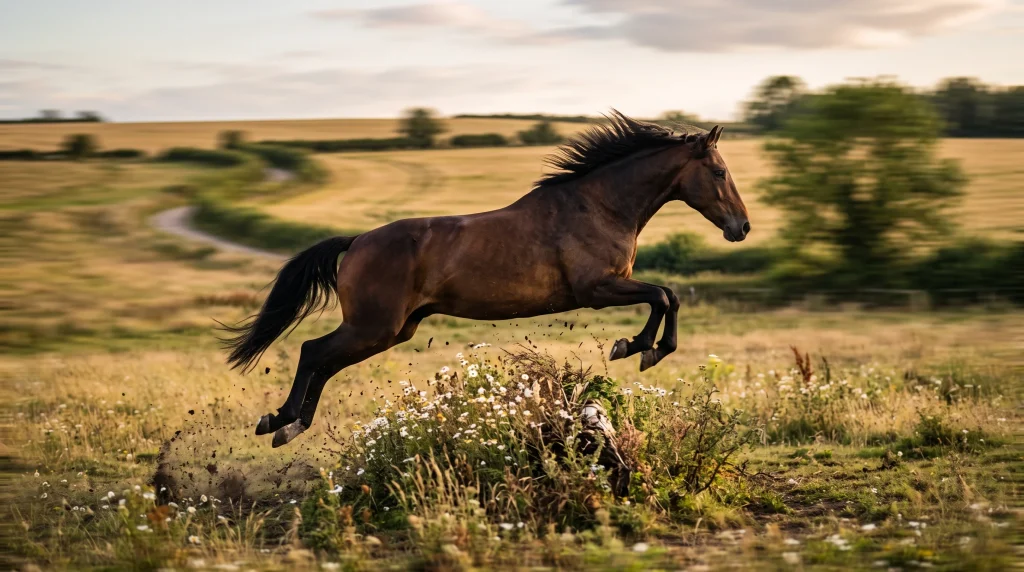
Deciding when to press the shutter changes everything. If you hit it just as the horse’s legs are fully extended midstride, you get that real feeling of power and grace.
Some tricks I use:
- Keep both eyes open; watch for visual cues while tracking through the viewfinder.
- For jumps, press the shutter right as the horse takes off, not after they’re already in the air.
- If you want a sense of speed, try a slower shutter speed (like 1/320s) and pan your camera with the motion. The horse stays mostly sharp, but the background blurs, which makes for dramatic images.
Catching “the moment” takes patience and practice, and it doesn’t hurt to fire off a few extra shots and pick your favorite later! Even seasoned pros admit that the perfect shot sometimes comes from a splitsecond decision, so don’t stress if it takes time to get your timing just right. Eventually, the rhythm of horse movements will start to feel more natural to anticipate.
Composition? Bring the Image to Life
Images with good composition stand out. With horse action shots, I like to:
- Leave room in the frame for the horse to “move into.” This gives photos a sense of direction and energy.
- Use the rule of thirds; it’s a classic for a reason. Placing the horse’s head or eye on an intersection point draws instant focus.
- Look for dramatic backgrounds. Open sky, natural landscapes, or the dust and dirt kicked up in an arena add character to movement shots.
Sometimes, a bit of cropping in post makes a big difference if you need to finetune the action. Adjusting contrast and sharpening a little in editing can also make details pop, especially if the original light was a bit flat.
Common Problems and Real-World Fixes
Dealing with Motion Blur
- Increase shutter speed if images are blurry.
- Doublecheck autofocus is tracking, not locked to a single spot.
- Stabilize your stance; elbows in, knees slightly bent, or use a monopod.
Busy Backgrounds
- Change your angle or move left/right a bit to lose distractions.
- Use wide apertures (lower fstop numbers) to blur the background.
Missing the Action
- Wait for moments you can anticipate, like repeated laps or jumps.
- Use burst mode liberally, then sort through later.
Frequently Asked Questions About Horse Action Photography
How close should I get to the horse?
I usually keep at least 10 to 15 feet away. A zoom lens lets me get in tight without crowding the horse’s space, and it keeps everyone safer.
Do I need expensive gear to get good shots?
I’ve gotten great images with both pro gear and entrylevel cameras. Fast shutter speeds and good timing matter more than the latest tech. It’s more important to get comfortable with your camera and practice anticipating the action than to buy the top-of-the-line setup. Master your gear and you’ll still capture those eye-catching moments!
What’s the easiest action to practice with?
Trotting in a big open field is perfect for getting started. Horses move fast enough for dramatic shots, but not so quick that you feel rushed. As you improve, you can try capturing cantering, galloping, or jumping, which each bring their own challenges and opportunities for creative images.
Next Steps for Sharper, More Dynamic Horse Photos
Photographing horses in motion brings together timing, technical skills, and a real appreciation for animal behavior. Give yourself plenty of tries to get comfortable, be patient, and don’t be afraid to experiment with new angles or settings. Consider reviewing your photos afterward to see what worked and where you can improve—this helps you grow as a photographer and get more out of each session.
Quick-Start Checklist:
- Scout your location and talk to handlers for safety tips.
- Set your camera for fast shutter speeds and continuous focus.
- Start with sideon shots and work up to panning or tricky jumps.
Every shoot is a little different, and there’s always something new to learn. Connecting with other horse photographers online or offline can offer fresh perspectives, and asking questions is never a bad thing. If you have a favorite horse action photo, feel free to share it or check in with me—I’m always happy to help other horseloving photographers get the best out of their camera time!
With consistent practice, a thoughtful setup, and an appreciation for the horses you’re photographing, you’ll see steady improvement and get those eye-catching, energetic images you’re after.
So grab your gear, get out there, and let your creativity ride high!
Action cameras for horse riders on Amazon
Build Your Online Business
and Learn Affiliate Marketing
See you there!
Our Unique Value Propositions
Discover why Chwals GPT is the top choice for equestrians looking
to build their online presence (register for free)
Tailored Equestrian Expertise – Community Connection – Intuitive User Experience